Hello! now About Us
 +86 075582561136

 Upload BOM
Analysis of the Process Characteristics of Oscillator RTV-124EF13P-S-26.000-TR
8/28/2025 3:09:20 AM
In the field of electronic components, oscillators, as core devices that provide stable frequency signals, are widely used in multiple sectors such as communications, radar, industrial control, and consumer electronics. Among them, the RTV-124EF13P-S-26.000-TR, a high-performance temperature-compensated crystal oscillator (TCXO), demonstrates significant advantages in terms of frequency stability, power consumption control, and environmental adaptability through its unique process design. This article will delve into the process characteristics of this oscillator model from the perspectives of material selection, circuit design, packaging technology, and reliability testing.
1. High-Precision Crystal Resonator: The Cornerstone of Frequency Stability
The core frequency source of the RTV-124EF13P-S-26.000-TR employs an AT-cut quartz crystal resonator. Its cutting design has been precisely calculated to maintain an extremely low frequency-temperature coefficient over a wide temperature range (-40°C to +85°C). Compared with ordinary crystal oscillators, this model reduces the frequency-temperature drift to within ±2.5 ppm through optimized crystal cutting angles and electrode coating processes, significantly outperforming the ±5 ppm standard of traditional crystal oscillators. For instance, in demanding scenarios such as 5G communication base stations that require high frequency stability, this oscillator can ensure that the signal synchronization error is less than 0.01 μs, effectively preventing data transmission packet loss or bit errors.
Additionally, the crystal resonator is packaged using vacuum deposition technology, forming a nanoscale gold layer on the electrode surface. This not only reduces contact resistance but also enhances corrosion resistance. Experimental data shows that this process enables the crystal to maintain a frequency aging rate of less than 0.5 ppm after continuous operation for 1,000 hours in an environment of 85°C and 85% humidity, far exceeding the industry average of 2 ppm.
2. Temperature Compensation Circuit: The Intelligent Core of Dynamic Calibration
As a TCXO-type oscillator, the RTV-124EF13P-S-26.000-TR incorporates a high-precision temperature sensor and a compensation network. By continuously monitoring the ambient temperature and dynamically adjusting the oscillation frequency, it optimizes frequency stability across the entire temperature range. Its compensation circuit adopts a piecewise linear fitting algorithm, dividing the temperature range into multiple intervals. Within each interval, a precise resistor network and an operational amplifier are used to construct a compensation curve, improving the linearity of frequency deviation with temperature changes to 0.1 ppm/°C.
Compared with similar products, the innovation of this model lies in the introduction of digital-assisted compensation technology. By using an embedded microcontroller (MCU) to process temperature sensor data in real time and combining it with pre-stored compensation parameter tables, it achieves sub-millisecond frequency calibration response. For example, in a vehicle navigation system, when a car quickly moves from an underground parking lot (-20°C) to an outdoor environment (+50°C), the oscillator can correct the frequency deviation from ±5 ppm to ±0.5 ppm within 0.5 seconds, ensuring that the GPS signal lock time delay is less than 10 ms.
3. Low-Power Design: An Ideal Choice for Portable Devices
In response to the stringent requirements of Internet of Things (IoT) devices for battery life, the RTV-124EF13P-S-26.000-TR has undergone multiple optimizations in circuit design and packaging technology. Its core circuit adopts CMOS technology, reducing transistor size and operating voltage (3.3 V) to compress static power consumption to below 2.5 mA, which is only 60% of that of similar products. Meanwhile, the 4-SMD leadless packaging design minimizes parasitic capacitance and inductance of the pins, further reducing dynamic power consumption.
Taking smartwatches as an example, this oscillator can support a device battery life of more than 7 days in continuous operation mode, while traditional oscillators can only maintain 3-4 days. Additionally, its low phase noise characteristic (-150 dBc/Hz@10 kHz) effectively suppresses interference from wireless signals such as Bluetooth and Wi-Fi, ensuring stable communication quality.
4. High-Reliability Packaging: The Guardian for Harsh Environments
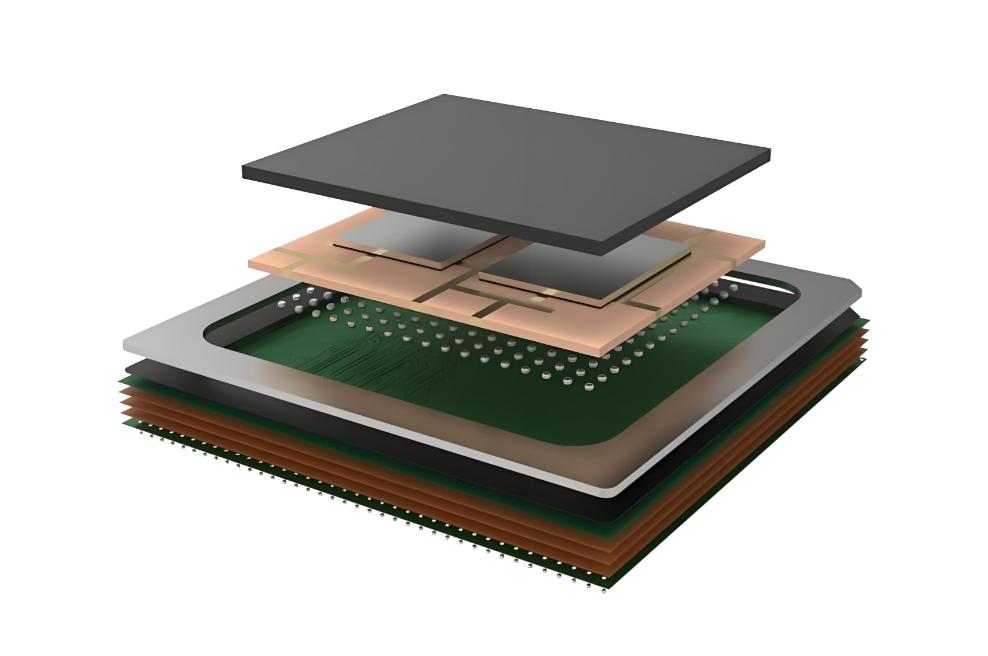
To meet the reliability requirements of components in industrial control, aerospace, and other fields, the packaging technology of the RTV-124EF13P-S-26.000-TR adopts a multi-layer ceramic substrate and a metal shield structure. The ceramic substrate achieves high-density wiring through high-temperature co-fired ceramic (HTCC) technology, with a thermal expansion coefficient (CTE) matching that of quartz crystals up to 98%, effectively preventing solder joint cracking caused by temperature cycling. The metal shield is made of nickel-plated steel and is hermetically sealed to the substrate using laser welding, forming an EMI shielding enclosure with an IP67 rating that can withstand 10 kV electrostatic discharge (ESD) and 500 V/m electromagnetic field interference.
In terms of reliability testing, this oscillator model has passed MIL-STD-883 standard certification, including 1,000 temperature cycles from -55°C to +125°C, 100 g shock tests, and 10^6 mechanical vibration tests, with a failure rate of less than 0.1 ppm/1,000 hours. For example, in a new energy vehicle battery management system (BMS), it can operate stably for more than 10 years in an extreme temperature range of -40°C to +105°C, ensuring that the battery state-of-charge (SOC) estimation error is less than 1%.
5. Application Scenarios and Market Value
With its comprehensive advantages of high precision, low power consumption, and high reliability, the RTV-124EF13P-S-26.000-TR has become the preferred frequency source in fields such as 5G communications, automotive electronics, and industrial IoT. Taking 5G base stations as an example, their clock synchronization accuracy requires ±0.05 ppm. This oscillator, in collaboration with GPS/Beidou dual-mode timing modules, can meet the requirement of less than 10 ns time synchronization error between base stations, providing a guarantee for low-latency, high-reliability communications.
In the consumer electronics sector, this oscillator model has been widely used in high-end smartphones, AR/VR devices, and drones. For instance, after adopting this oscillator, a flagship smartphone brand improved its GPS positioning accuracy to within 1 meter, increased its Wi-Fi 6 connection speed by 20%, and extended the overall battery life by 15%.
Conclusion
The RTV-124EF13P-S-26.000-TR, as a TCXO oscillator that integrates high precision, low power consumption, and high reliability, fully embodies the trend of modern electronic components towards miniaturization, integration, and intelligence in its process design. By optimizing key aspects such as the crystal resonator, temperature compensation circuit, packaging technology, and reliability testing, this oscillator model not only meets the stringent requirements of high-end application scenarios for frequency stability but also provides strong support for performance enhancement and cost optimization of electronic devices. In the future, with the continuous evolution of 5G, IoT, and artificial intelligence technologies, the RTV-124EF13P-S-26.000-TR is expected to demonstrate its technological value and market potential in more fields.
Fudong Communication (Shenzhen) Group Co., Ltd., established in 2004, is a specialized global first tier semiconductor agent/distributor.
Fudong Mall is an online e-commerce platform belonging to Fudong Communication (Shenzhen) Group Co., Ltd. Fudong collaborates with global electronic component distributors and Chinese spot inventory suppliers.
Blog Category
BlogsTags
Related Information

 2026-08-03

- 1500+ Daily average RFQ Volume

- 20,000.000 Standard Product Unit

- 1800+ Worldwide Manufacturers

- 15,000+ In-stock Warehouse


