Hello! now About Us
 +86 075582561136

 Upload BOM
STM32F405RGT6: The Core Engine for High-Performance Embedded Systems
1/21/2026 1:22:43 AM
In the rapid evolution of industrial automation, smart vehicles, and IoT applications, the demand for high-performance microcontrollers (MCUs) continues to surge. STMicroelectronics' STM32F405RGT6 stands out as a premier solution for mid-to-high-end embedded development, offering exceptional performance, rich peripheral interfaces, and flexible configuration capabilities. This article explores its technical features, application scenarios, and key development considerations.
1. Technical Features: Balancing Performance and Power Efficiency
Built on the ARM Cortex-M4 core with a 168 MHz clock speed, the STM32F405RGT6 integrates an Adaptive Real-Time Accelerator (ART Accelerator) and a single-precision Floating-Point Unit (FPU), enabling zero-wait-state execution from Flash memory with a computational performance of 210 DMIPS/1.25 DMIPS/MHz. Its memory resources include 1 MB Flash and 192 KB SRAM (including 64 KB core-coupled memory), supporting external memory expansion for complex algorithms and data buffering.
Key Peripheral Specifications
|
Peripheral |
Type Specifications |
|
ADC |
3×12-bit analog-to-digital converters with 24-channel sampling, up to 7.2 MSPS triple-interleaved mode |
|
Timers |
12×16-bit timers + 2×32-bit timers, supporting PWM output, encoder interfaces, and quadrature decoding |
|
Communication |
2×CAN 2.0B, 4×USART/2×UART, 3×SPI (including 2×I2S audio interfaces), USB OTG (full-/high-speed) |
|
Analog Signals |
2×12-bit DAC, internal 16 MHz RC oscillator (±1% accuracy), 32 kHz low-power RTC |
|
Power Modes |
Sleep, Stop, Standby modes; VBAT-powered RTC and 20×32-bit backup registers |
2. Application Scenarios: From Industrial Control to Consumer Electronics
1. Industrial Automation: PLC and Robotics Control
In programmable logic controllers (PLCs), the STM32F405RGT6 uses multi-channel ADCs to capture real-time sensor data (e.g., temperature, pressure) and executes control algorithms via DSP instructions. CAN bus or Ethernet enables multi-node coordination. For robotic motion control, its two motor-control-specific PWM timers generate precise drive signals, while quadrature encoder inputs ensure closed-loop position/speed control at 168 MHz real-time responsiveness.
2. Automotive Electronics: Battery Management and Infotainment
In electric vehicle battery management systems (BMS), three 12-bit ADCs monitor cell voltages and temperatures, with FPU-optimized charge/discharge strategies transmitted via CAN to the vehicle controller. For in-car infotainment, LCD parallel interfaces drive navigation displays, USB OTG connects external storage, and Ethernet enables cloud connectivity.
3. Consumer Electronics: Audio Processing and Smart Home
High-end audio devices leverage its dual 12-bit DACs and I2S interfaces for high-fidelity output, with DSP instructions handling audio filtering and effects. Smart home gateways use Wi-Fi/Bluetooth to connect devices, monitor sensors via abundant I/Os, and communicate with clouds through Ethernet/4G, forming a unified ecosystem.
3. Development Essentials: Pin Remapping and ADC Optimization
1. Pin Remapping Configuration
The 64-pin LQFP package supports multi-peripheral pin sharing via Alternate Function (AF) registers. For example, configuring PB6 as I2C1_SCL requires:
Setting GPIOB_MODER to alternate mode (0x02);
Configuring GPIOB_OTYPER as open-drain (0x01);
Setting GPIOB_OSPEEDR to high speed (0x03);
Selecting AF4 (I2C1) via GPIOB_AFRL.
2. Enhancing ADC Sampling Accuracy
To resolve instability or nonlinear errors:
Sampling Time: Use ≥112 cycles for high-impedance sources (>10 kΩ).
Clock Division: Keep ADCCLK at 20–30 MHz for optimal precision-speed trade-offs.
Reference Voltage: Replace default VDDA with an external reference (e.g., REF3130) and add 10 μF tantalum + 100 nF ceramic capacitors for filtering.
Calibration: Perform zero-offset calibration (short-circuit measurement) and linearity calibration (INL/DNL compensation).
4. Q&A: Developer FAQs
Q1: What are the key differences between STM32F405RGT6 and F407 series?
A: The F405RGT6 uses a 64-pin LQFP package with 1 MB Flash but lacks FSMC (Flexible Static Memory Controller) and DCMI (Camera Interface), ideal for space-constrained high-performance applications. The F407 series offers 100-pin packages with FSMC/DCMI for graphics or image capture needs.
Q2: How to troubleshoot abnormal ADC readings?
A: If only some channels (e.g., PA0–PA7) output 4095 (full scale) when connected to VCC:
Check for peripheral conflicts (e.g., USART/SPI using the same pins);
Verify ADC calibration (HAL_ADCEx_Calibration_Start);
Ensure proper PCB layout (analog traces away from high-speed signals, add RC low-pass filters).
Q3: Does the chip support RTOS and open-source ecosystems?
A: Yes, it is compatible with FreeRTOS, RT-Thread, and open-source communities like Arduino/MicroPython. Developers can use STM32CubeMX toolchains to generate initialization code, accelerating project development.
Conclusion
The STM32F405RGT6 delivers balanced performance, rich peripherals, and a mature ecosystem for industrial control, automotive, and consumer applications. As IoT and edge computing expand, its local processing capabilities and low power consumption will further broaden its utility, providing developers with an efficient solution for embedded challenges.
Fudong Communication (Shenzhen) Group Co., Ltd., established in 2004, is a specialized global first tier semiconductor agent/distributor.
Fudong Mall is an online e-commerce platform belonging to Fudong Communication (Shenzhen) Group Co., Ltd. Fudong collaborates with global electronic component distributors and Chinese spot inventory suppliers.
Blog Category
BlogsTags
Related Information

 2026-07-28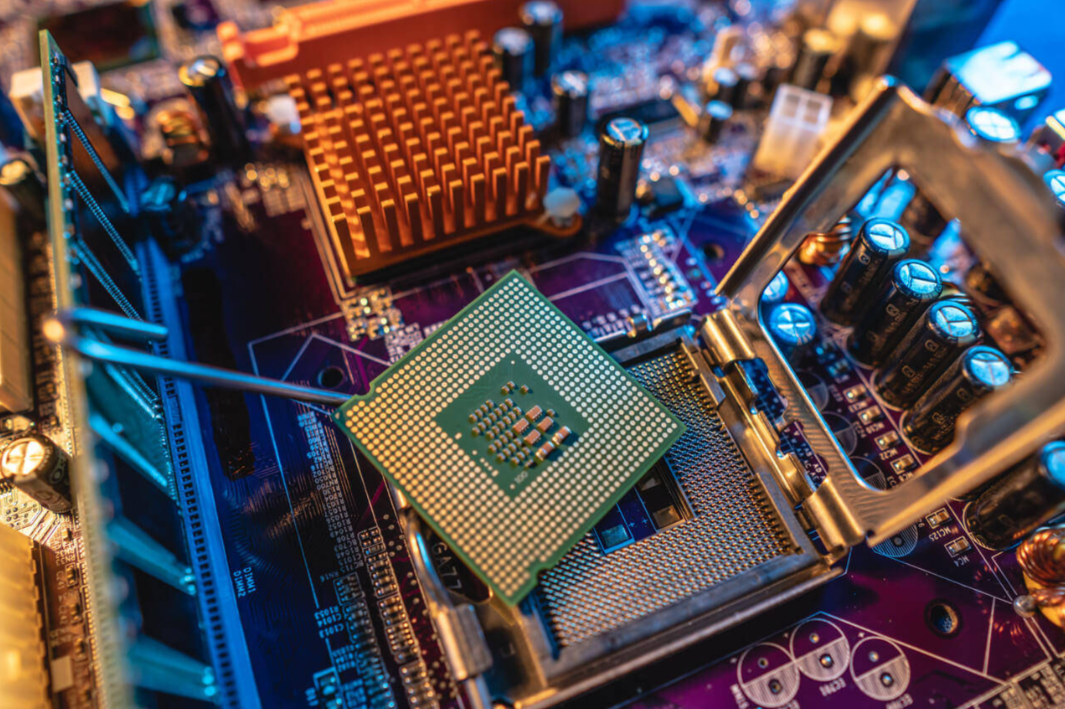

- 1500+ Daily average RFQ Volume

- 20,000.000 Standard Product Unit

- 1800+ Worldwide Manufacturers

- 15,000+ In-stock Warehouse


